Admin
Admin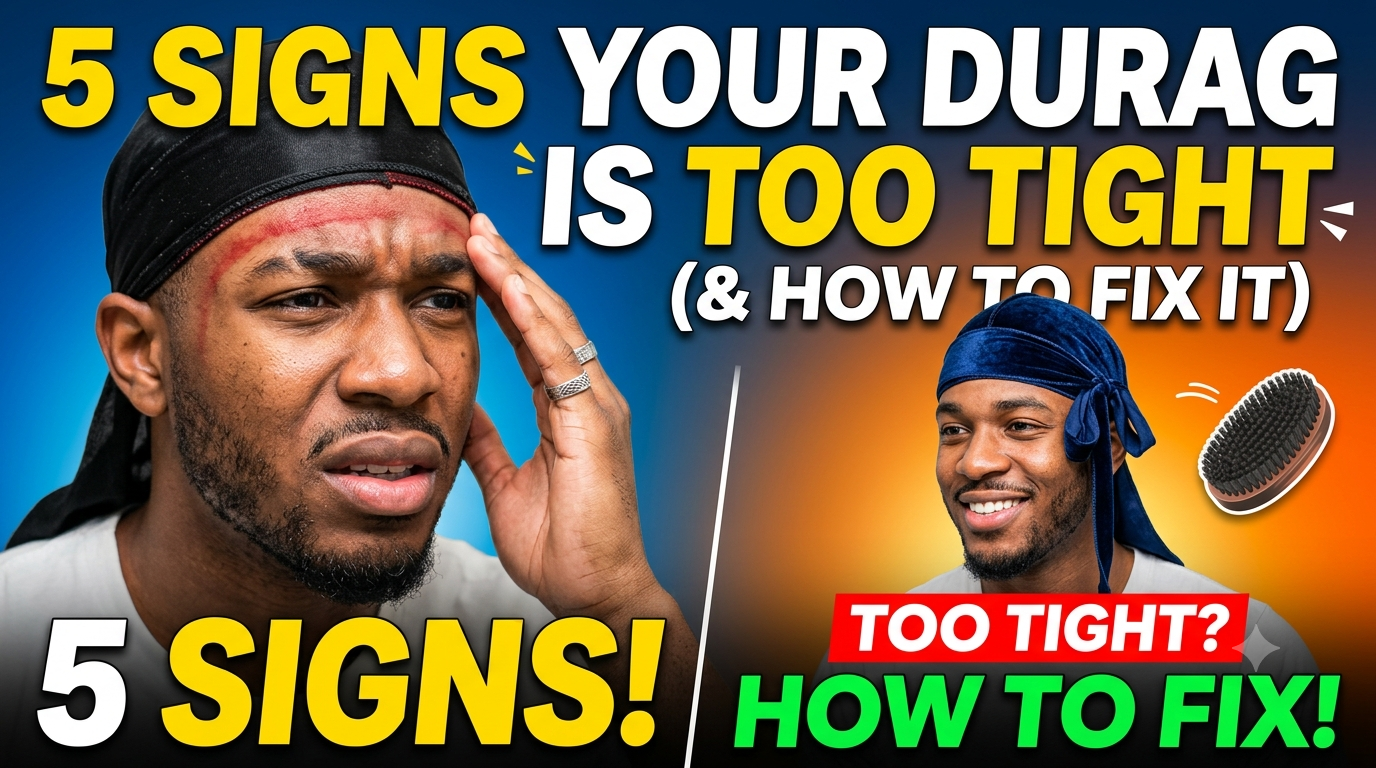
Wearing a durag is one of the best things you can do for your hair — whether you are building waves, protecting braids, maintaining locs, or simply keeping your natural hair moisturized overnight. But there is a common mistake that a surprising number of people make without even realizing it, and it quietly works against everything you are trying to achieve. That mistake is tying your durag too tight.
It seems counterintuitive. If compression is good, then more compression should be better, right? Not exactly. There is a significant difference between the firm, even compression that helps your wave pattern set and the excessive tightness that puts harmful stress on your scalp, hairline, and hair follicles. Finding that balance is crucial, and the problem is that most people who wear their durag too tight do not realize they are doing it until the damage has already started showing up.
This guide walks you through five clear signs that your durag is too tight, explains what is actually happening to your hair and scalp when you overtighten, and gives you practical solutions to fix your tying technique so you get all the benefits of wearing a durag without any of the downsides.
Sign 1: You Wake Up With Headaches or Pressure Around Your Head
This is one of the most obvious signs and also one of the most commonly ignored. If you regularly wake up in the morning with a headache, a feeling of pressure around your forehead or temples, or soreness along the band where your durag sits, your durag is almost certainly too tight.
A durag that fits correctly should feel snug and secure — you should be aware that it is on your head, but it should not be creating any discomfort. When you tie the tails too forcefully or wrap them around your head with too much tension before knotting, you are essentially creating a band of pressure that constricts blood flow to the scalp and puts constant stress on the skin and tissue around your hairline. Over eight hours of sleep, that pressure adds up significantly.
The headaches are your body’s way of telling you that something is wrong. Do not push through them or assume they will go away on their own. Persistent scalp pressure from a too-tight durag can cause more than just discomfort — it can contribute to hair follicle stress and long term hairline issues if left unaddressed.
How to fix it: Retie your durag with noticeably less tension in the tails. After tying, you should be able to slide one finger comfortably underneath the band at your forehead without it feeling wedged in. If you cannot do that, loosen the knot and try again. The fit should feel like a firm handshake, not a vice grip.
Sign 2: You Have a Visible Indentation or Red Mark on Your Forehead After Removing It
Take your durag off and look in the mirror immediately after. Do you see a deep red line across your forehead where the edge of the durag sat? Does your skin look indented or irritated along the band? That mark is a physical record of how much pressure your durag was putting on your skin throughout the night.
A small, faint line that fades within a few minutes is relatively normal and not a major concern — it simply means the durag was in contact with your skin, which is expected. The problem is when the mark is deep, red, and takes a long time to fade, or when you can feel tenderness or soreness in the skin along that line. That level of marking indicates that the band was pressing into your skin with enough force to cause real irritation.
Beyond the cosmetic concern, a band pressing that hard into your skin is also pressing into your hairline. The hair follicles along your edges are some of the most delicate on your head, and repeated compression of this intensity stresses them in ways that can contribute to thinning and recession over time.
How to fix it: Pay attention to where you position the front edge of your durag. It should sit just above your natural hairline — not pulled down onto your forehead skin or pressing into the hairline itself. Combine this with lighter tying tension and the marking should reduce significantly. If you are using a durag with a thick or stiff front band, consider switching to one with a softer, thinner edge that distributes pressure more gently.
Sign 3: Your Edges Are Thinning or Your Hairline Is Receding
This is the most serious sign on this list and the one that requires the most urgent attention. If you have noticed over time that your edges are becoming thinner, your hairline is looking less full than it used to, or there are small patches near your temples where the hair seems to be disappearing, a too-tight durag may be a contributing factor.
What is happening in this situation is a condition called traction alopecia — hair loss caused by repeated, sustained tension on the hair follicles. The follicles around your edges and temples are particularly vulnerable because the durag band sits directly over them and the tails wrap across this area before being tied. When the tension is too high and the exposure is prolonged — night after night for weeks or months — the follicles become damaged and stop producing hair in those areas.
Traction alopecia is unfortunately common in communities that regularly use tight headwear, tight hairstyles, or any consistent source of tension at the hairline. The good news is that when caught early enough, it is often reversible once the source of tension is removed and the follicles are given time to recover. The bad news is that chronic, long-term traction alopecia can cause permanent follicle damage that does not reverse on its own.
How to fix it: Loosen your durag immediately and give your hairline a break. Take a few nights off from wearing it altogether to let your scalp decompress. When you return to wearing it, focus on a much lighter tie — the tails should wrap around without pulling, and the knot should hold through gentle tension rather than force. Consider applying a nourishing hair oil like castor oil or jamaican black castor oil to your edges daily to support follicle recovery. If the thinning is significant or continues even after reducing tension, consult a dermatologist or trichologist who specializes in hair loss.
Sign 4: Your Scalp Feels Itchy, Irritated, or You Notice Increased Dandruff
If you have been wearing your durag consistently and you start noticing more itchiness than usual, a flaky scalp, or patches of irritation along your hairline or across your scalp, the tightness of your durag could be playing a role even if it is not the only factor.
Here is what happens. When a durag is tied too tight, it restricts airflow to the scalp. Your scalp needs some degree of ventilation to stay healthy — it produces natural oils, sheds dead skin cells, and regulates temperature, all of which require some level of air circulation. A durag that is pressed too firmly against every part of your scalp traps heat and sweat, creates a warm, moist environment, and prevents the natural shedding process from working properly. The result is an irritated, flaky scalp that becomes increasingly uncomfortable the longer the pattern continues.
It is also worth noting that a too-tight durag can reduce circulation to the scalp. Good blood flow to the scalp is essential for healthy hair growth — it delivers the oxygen and nutrients that hair follicles need to function. Consistently restricting that circulation, even modestly, can slow hair growth and contribute to a dull, less healthy scalp environment over time.
How to fix it: Loosen your tie and make sure your durag material is breathable. Silk is the most breathable option and the least likely to trap heat and moisture against your scalp. Wash your durag regularly — a dirty durag worn against your scalp night after night transfers bacteria and buildup directly onto your skin. Also make sure you are not wearing your durag around the clock. Give your scalp several hours of free air exposure each day and establish a consistent washing routine to keep your scalp clean and balanced.
Sign 5: Your Wave Pattern Has Lines, Creases, or Uneven Spots
This one is specifically for wavers, and it is a frustrating sign because it means your durag — the tool you are using to build your waves — is actually working against your wave pattern rather than supporting it.
When a durag is tied too tight, the fabric pulls unevenly across your scalp. Areas where the tension is highest get pressed down too aggressively, flattening not just the surface of the hair but disrupting the wave formation underneath. The seam of the durag, if pressed too hard into your hair, can leave a visible line running down the center of your wave pattern. Areas near the knot where the fabric bunches under the tension of the tie can create irregular indentations in your waves. The result is a wave pattern that looks uneven, creased in the wrong places, or interrupted by lines that cut across the formation you worked hard to build.
Good compression for wave building is even and consistent across the entire surface of your hair. A too-tight durag creates uneven pressure — some spots are over-compressed while others are pulled away from the scalp entirely depending on how the tension travels through the fabric.
How to fix it: Start by making sure your durag is seated evenly on your head before you begin tying, with the center seam running straight down the middle from front to back. Smooth out any wrinkles or bunches in the fabric before bringing the tails around. Tie with steady, even tension rather than pulling hard on one tail more than the other. If the seam is causing visible lines in your hair, look for a durag described as having a flat or minimal seam — some brands design their durags specifically to reduce seam impact on the wave pattern. After tying, run your hand gently across the surface of the durag to feel whether the pressure feels even all the way around or concentrated in certain spots.
Finding the Right Level of Tightness
Now that you know the signs to watch for, the practical question is how to consistently find the right level of tightness every time you tie your durag. Here are the principles to keep in mind.
The one finger test is the most reliable quick check. After tying your durag, try to slide one finger under the band at your forehead. If you can do it comfortably, the tension is in the right range. If you cannot slide your finger under at all, it is too tight. If two or three fingers slide under easily and the durag feels loose, it needs to be tightened.
The duration of comfort test is just as important. Put your durag on and wear it for thirty minutes going about your normal routine. At the end of those thirty minutes, check in with how your head feels. If there is any sense of pressure, tightness, or the beginning of a headache, it is too tight. A correctly tied durag should feel comfortable for hours without creating any discomfort.
The removal check rounds out your assessment. When you take your durag off after sleeping, look at your forehead and run your fingers along your hairline. A faint, quickly fading mark is acceptable. Deep redness, soreness to the touch, or a mark that takes more than five minutes to fade means you need to reduce your tying tension.
The Bigger Picture
Wearing a durag correctly is about working with your hair rather than against it. The goal is to support your hair health, protect your style, and enhance your wave pattern — not to compress your scalp into submission. Tighter is not better. Consistent, comfortable compression applied night after night is what builds waves, protects styles, and keeps your hair and scalp in the best possible condition.
If you have been wearing your durag too tight and you recognize some of these signs in your own experience, the fix is simpler than you might think. Loosen your tie, check your fit with the techniques above, give your scalp some time to recover, and rebuild your routine with a more balanced approach. Your hair will respond positively, your waves will actually look better, and the whole experience of wearing a durag will become more comfortable and sustainable for the long term.
A durag that fits right does not need to fight your head to stay on. When the material, the tension, and the technique are all working together correctly, the durag sits comfortably, holds your hair pattern effectively, and comes off in the morning leaving your hair looking exactly the way you hoped it would.
Find more durag guides, wave tips, and hair care advice at DuragsGuides.com.