Admin
Admin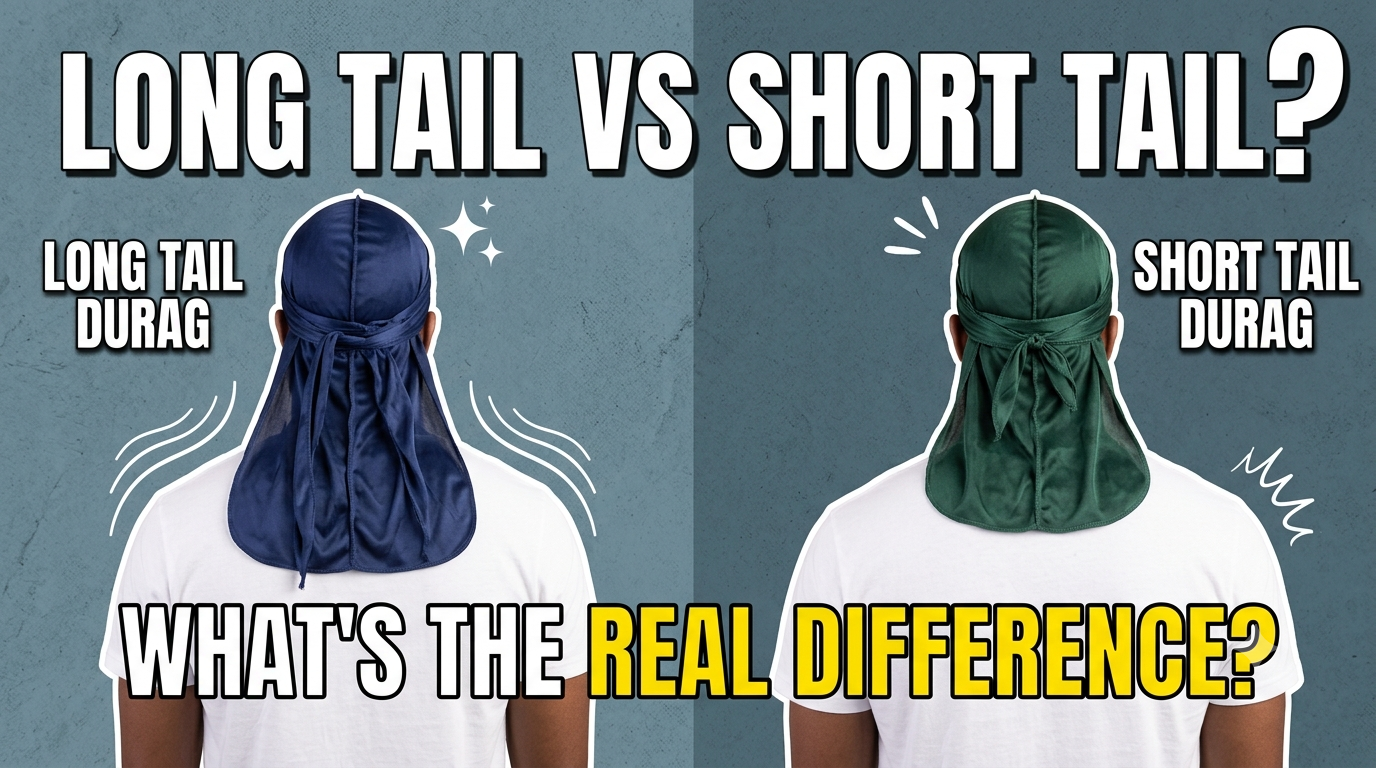
Durag With Long Tail vs Short Tail: What’s the Real Difference?
If you have ever shopped for a durag online or walked into a beauty supply store, you have probably noticed that not all durags have the same tail length. Some come with tails that hang all the way down your back, while others barely reach the nape of your neck. Most beginners assume the tail is just decorative — something that adds to the look but does not really affect performance. That assumption is wrong, and it leads a lot of people to buy a durag that does not actually work as well as it should for their hair goals.
The tail length of a durag affects how you tie it, how much compression you get, how secure the fit is overnight, and even how your scalp feels after wearing it for extended periods. Understanding the real difference between long tail and short tail durags helps you make a smarter buying decision and get better results from your wave routine. This guide breaks it all down from top to bottom.
What the Tail Actually Does
Before getting into the comparison, it is worth understanding the purpose of the tail in the first place. The tails on a durag are not there for style alone — they are a functional part of the design. When you tie a durag, you wrap the tails around the back of your head, cross them over each other, and bring them forward to tie at the front. This wrapping motion is what creates the compression that holds your wave pattern in place.
The tails are essentially your tension control system. How long they are, how many times you can wrap them, and how securely they can be tied all directly affect how well the durag does its job. A tail that is too short limits your options, reduces compression, and is more likely to come loose. A tail that is long enough gives you full control over the fit, the pressure, and the security of your durag — whether you are wearing it for a quick post-brush session or through eight hours of sleep.
Short Tail Durags: What You Get
Short tail durags typically have tails that measure somewhere between eight and fourteen inches in length. They are compact, minimalist, and often marketed for casual wear or fashion purposes rather than dedicated wave building.
The appeal of short tails is mainly aesthetic and practical in a casual sense. They look cleaner and less bulky when worn, the tails do not hang or dangle visibly, and they are easier to put on quickly without dealing with long strips of fabric. For someone who just wants head coverage or is wearing a durag as a fashion accessory rather than a wave tool, the short tail makes sense.
The problem with short tails for wave building is that they simply do not give you enough length to wrap properly around your head and create solid compression. When you tie a short tail durag, you are often left with a knot that sits loosely at the front, tails that barely complete one full wrap around your head, and a fit that shifts or loosens over time. During the day this might feel manageable, but overnight it becomes a real issue. A short tail durag that felt snug when you went to bed can easily loosen or slip off entirely as you move around in your sleep, leaving your hair unprotected for most of the night.
Short tail durags also tend to leave the edges of your hair less covered. Because the tails do not wrap far enough around your head, the sides and lower back of your hairline may not receive consistent compression, which leads to uneven wave development — strong in the crown area but weaker on the sides and back where the durag is not reaching effectively.
For beginners especially, a short tail durag can give the false impression that the durag is not working, when the real issue is that the tail is too short to create the compression needed for results.
Long Tail Durags: What You Get
Long tail durags have tails that measure anywhere from eighteen inches to over thirty inches in length depending on the brand and style. These are the durags that dominate the wave community for good reason — the extra length unlocks a level of versatility and compression control that short tails simply cannot match.
Maximum compression. With a long tail, you have enough length to wrap around your head more than once before tying. Each additional wrap adds a layer of compression that presses your hair more firmly and evenly against your scalp. For wavers who are in the early stages of building their pattern or who have thicker hair that resists lying flat, this extra compression can make a significant difference in how quickly and deeply the waves develop.
A more secure overnight fit. Long tails give you the ability to tie a knot that holds firmly through hours of sleep. Because you have more fabric to work with, you can tie off with enough tension to keep the durag in place even as your head moves around on the pillow. This is one of the most important practical advantages of a long tail durag — it stays on while you sleep, which is exactly when you need it most.
Better edge and side coverage. When the tails wrap further around your head, they cover more of the sides and lower portions of your hairline. This means more consistent compression across the entire surface of your hair, not just the crown. For people working on getting their 360 waves to connect evenly all the way around, full coverage from a long tail durag helps ensure no area is being left out of the compression zone.
Styling flexibility. Long tails give you more options for how you wear your durag. You can tie the knot at the front for a traditional look, loop the tails around and tuck them in for a cleaner appearance, or leave the tails hanging as a style choice. Short tails only give you one option because there is barely enough length to complete a basic tie.
The only real downside of long tails is that they require a bit more practice to tie correctly. If you are new to wearing durags, all that extra fabric can feel awkward at first. Some people also find that very long tails can bunch up or get twisted during sleep, which can press uncomfortable folds against the side of their head. The solution is simply learning to fold or tuck the excess tail neatly before lying down.
Head-to-Head: The Key Differences
When you line up long tail and short tail durags across the factors that matter for wave development, the comparison becomes very clear.
Compression level. Long tail wins. More wraps around the head equals more consistent pressure against your hair and wave pattern.
Overnight security. Long tail wins. The knot holds more reliably through hours of movement during sleep.
Hair coverage. Long tail wins. Sides and edges get more consistent compression with longer tails wrapping further around the head.
Ease of tying. Short tail wins for simplicity, but the ease comes at the cost of performance.
Casual and fashion wear. Short tail wins for aesthetics when you want a clean, minimal look without visible dangling fabric.
Wave building effectiveness. Long tail wins clearly and consistently.
What Tail Length Should You Choose?
For anyone focused on building and maintaining 360 waves, a long tail durag is the right choice without much debate. The compression advantages, the secure overnight fit, and the full coverage it provides across your entire hairline all contribute directly to better and faster wave development. These are not minor differences — they affect the quality of your wave pattern in real, visible ways over time.
That said, there is a practical middle ground worth considering. Many wavers keep both styles in rotation. A long tail durag for overnight use and dedicated post-brush sessions where compression and security matter most, and a short tail durag for casual daytime wear when they want the head coverage without the bulk. This approach gives you the best of both without having to compromise on either end.
If you are buying your first durag and you are specifically starting your wave journey, do not settle for a short tail option thinking the difference is cosmetic. Get a long tail satin durag, learn how to tie it properly, and feel the difference in compression from your very first session. The results will show in your waves before long.
How to Tie a Long Tail Durag for Maximum Compression
Getting the most out of a long tail durag means tying it correctly. Here is the method that most wavers rely on for a solid, secure fit.
Place the durag on your head with the center seam aligned straight down the middle from front to back. Position the front edge just above your hairline — not too far back or your forehead will be exposed, and not pulled down too low or it will crease your waves at the front. Hold the tails and pull them back behind your head, crossing them over each other firmly at the nape of your neck. Bring the tails forward and wrap them around the sides of your head, crossing them at the front above your forehead. Tie them off in a secure knot — not so tight that it causes pressure or discomfort, but firm enough that the durag will not shift. Fold or tuck any remaining excess tail so it does not bunch under your head while you sleep.
The entire process takes about thirty seconds once you have done it a few times, and a properly tied long tail durag feels immediately different from a loosely tied short one. The compression is noticeable, the coverage is full, and your hair pattern has every chance to set properly through the night.
Final Thoughts
The difference between a long tail and short tail durag is not just about looks — it is about function, compression, and results. Short tail durags have their place for casual wear and fashion, but when it comes to building and protecting 360 waves, long tail durags are the superior tool in almost every measurable way.
Your durag is one of the most important parts of your wave routine. Choose one that is actually built to do the job, wear it consistently, and pair it with a solid brushing and moisturizing routine. The tail length is one of those small details that makes a bigger difference than most people expect — and once you experience the compression of a properly tied long tail durag, you will understand exactly why the wave community swears by them.
Find more in-depth durag guides and wave tips at DuragsGuides.com.